
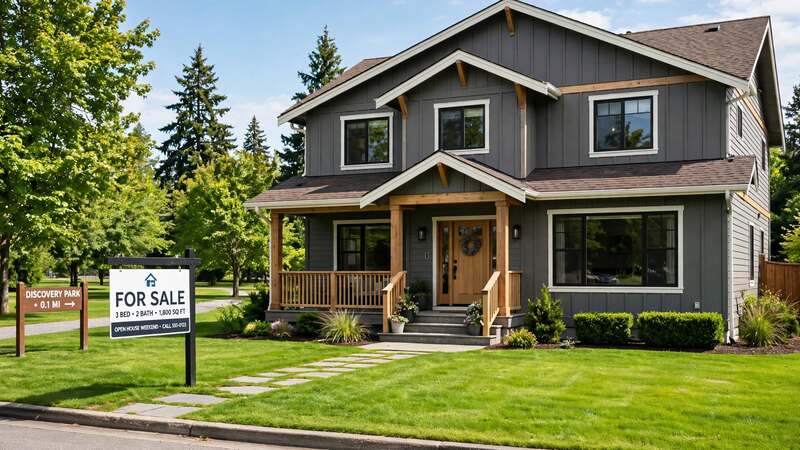
Securing prime residential real estate in major Pacific Northwest metropolitan areas requires a careful evaluation of geography, structural quality, and proximity to major natural assets. Within Seattle’s urban landscape, physical boundaries such as shorelines, steep bluffs, and expansive municipal parks dictate neighborhood stability and long-term land values. When urban growth boundaries limit outward expansion. Properties situated adjacent to major green spaces maintain strong structural demand across changing economic cycles.
Evaluating the long-term value of residential real estate near large urban parks requires looking beyond immediate lifestyle benefits. Analyzing micro-market dynamics, building envelope integrity, and local zoning laws ensures that property acquisitions serve as stable, high-performing financial assets.
The Structural Value of Proximity to Large Municipal Parks
Urban planning research consistently demonstrates that large, protected green spaces serve as permanent geographical anchors for neighboring residential real estate. Unlike vacant commercial parcels or adaptable industrial zones. Dedicated municipal parks like Discovery Park cannot be re-zoned or developed. This permanent environmental protection creates an artificial ceiling on housing supply immediately surrounding the park perimeter.
Properties bordering major natural reserves enjoy several distinct long-term equity drivers:
- Permanent View Corridors: Homes positioned along park boundaries or elevated bluffs retain protected views of forested preserves, Puget Sound, and the Olympic Mountains.
- Acoustic and Environmental Buffers: Expansive parklands absorb urban noise, mitigate local heat island effects, and improve surrounding air quality.
- Constrained Supply Lines: Because the park occupies hundreds of acres of prime coastal peninsula land, adjacent residential inventory remains strictly finite.
Historical housing metrics tracked by the Housing Price Index highlight that close-in. Seattle residential neighborhoods featuring permanent geographic boundaries maintain high pricing resilience during broader market adjustments.
Evaluating Architectural Footprints and Property Profiles
The residential landscape surrounding Discovery Park on the Magnolia peninsula features a diverse mixture of mid-century single-family homes, historic brick Tudor residences, and modern architectural remodels. Understanding the distinct structural characteristics of these housing styles allows buyers to accurately project future maintenance reserves and capital improvement costs.
Matching architectural profiles with long-term capital goals ensures that property owners anticipate necessary envelope maintenance and infrastructure upgrades:
| Architectural Style | Prominent Construction Era | Primary Capital Asset | Key Structural Due Diligence |
| Historic Tudor / Craftsman | 1920s–1940s | Architectural character, dense framing | Masonry foundation bolting, side-sewer scoping |
| Mid-Century Daylight Ranch | 1950s–1970s | Open floor plans, expansive lot footprints | Roof truss integrity, uninsulated wall cavities |
| Modern Custom Infill | 2000s–Present | Energy efficiency, modern mechanical systems | Flat roof drainage design, exterior cladding seals |
Buyers and investors seeking residential assets positioned near coastal bluffs, expansive trails. And quiet residential streets frequently analyze active listings for Magnolia, Seattle homes for sale to secure properties in one of the city’s most established residential enclaves.
Infrastructure Considerations for Coastal and Bluff Properties
Acquiring real estate near marine environments and elevated park boundaries requires specialized due diligence. While proximity to Puget Sound provides exceptional views, coastal microclimates subject physical structures to higher environmental stress than inland residential properties.
<p>Before waiving inspection contingencies or closing purchase contracts, buyers should conduct targeted technical evaluations of the following core systems:
- Drainage and Water Runoff Management: High rainfall volumes combined with sloped topographies require functional perimeter French drains, catch basins, and proper discharge lines to move groundwater away from foundations.
- Geotechnical and Slope Stability: Properties situated near park bluffs or steep slopes require verification of soil stability and proper retaining wall construction to prevent erosion over time.
- Building Envelope Performance: Salt air, driven rain, and wind exposure accelerate the wear of window seals, exterior siding, and roofing materials. Selecting high-performance exterior materials prevents premature moisture intrusion.
Technical documentation published emphasizes that proactive moisture management and structural foundation. Reinforcement are critical for preserving the economic value of legacy residential buildings.
Transportation Corridors and Urban Connectivity
A primary advantage of residential enclaves like Magnolia is their distinct geographic isolation combined with rapid access to primary commercial centers. Situated on a peninsula just west of Queen Anne and Interbay. The neighborhood provides quiet residential streets without sacrificing access to major employment hubs.
Key transportation and connectivity advantages include:
- Direct Commercial Commutes: Multi-lane arterial roadways provide short commute times to Downtown Seattle, the South Lake Union tech corridor, and the Expedia global corporate campus.
- Maritime Infrastructure Access: Proximity to Salmon Bay, Shilshole Bay Marina, and Elliott Bay caters to maritime enthusiasts and commercial vessel operations.
- Transit and Non-Motorized Routes: Dedicated bike lanes and regional transit lines connect the peninsula directly to broader King County transit networks.
Research compiled in the U.S. Census Bureau American Housing Survey confirms that residential properties combining low neighborhood traffic density with direct commute access to primary urban commercial centers capture consistent long-term land value appreciation.
Long-Term Equity Preservation Through Land Use Discipline
Securing lasting financial value in mature urban housing markets requires a disciplined. Purchasing strategy focused on land value, building quality, and geographic positioning. Properties located near permanent natural landmarks like Discovery Park benefit from built-in supply constraints and steady buyer demand.
By combining thorough structural due diligence with an understanding of local topography and regional transit corridors. Home buyers position themselves to acquire high-performing real estate assets that deliver both long-term. Financial growth and exceptional residential utility. Click here see more details.