
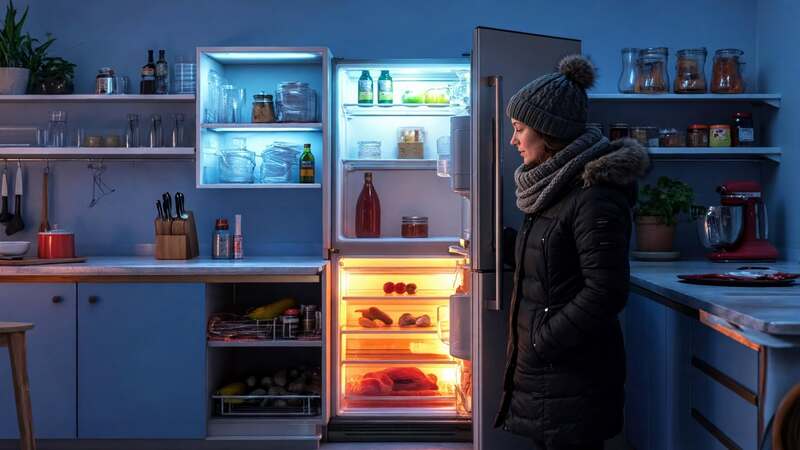
Here is a winter puzzle that catches a lot of Canadian homeowners. The second fridge lives in the garage, the garage is freezing, and yet the frozen burgers are going soft and the ice cream has turned to soup. It seems backwards. How can a fridge struggle to keep cold in a cold room? The answer explains a lot about how refrigerators work, and it is a good place to begin before you assume anything has broken.
Why Cold Rooms Confuse a Fridge
Most household refrigerators have one compressor and one thermostat, and that thermostat usually watches the fresh food side. When that section warms past its setting, the compressor runs and cools both compartments. When the garage is near freezing, the fresh food side never warms up, so the compressor has no reason to start. The freezer sits there waiting for cold air that never comes, slowly creeping up toward the temperature of the room.
Very low temperatures create a second problem. The oil in a compressor thickens in the cold, which makes starting harder and adds wear. Many fridges are designed for rooms between about 10°C and 40°C, and the manual will give the range for yours. Some models are built for garages or include a heater that fools the thermostat into running. Most older basement fridges were never meant for this kind of duty.
An unheated cold room or uninsulated garage is where this happens. A finished basement is usually fine. If the fridge is simply a beer and pop fridge through January, you may decide it is easier to empty it, prop the doors open, and restart it in spring. Otherwise, move it somewhere warmer.
The reverse situation shows up in July. A garage that hits 35°C makes the compressor run nearly non-stop, and it may never reach its setting. Same fridge, opposite complaint.
Measure Before You Diagnose
Forget the numbers on the control dial, since those are settings rather than readings. Put an appliance thermometer in a cup of water in the middle of the fresh food section and anotherbetween frozen packages. Give them eight hours. You are looking for about 4°C in the fridge and about -18°C in the freezer.
A few degrees off, with everything else behaving, usually means a setting or a habit. A fridge at 10°C with the freezer still hard is a real fault, and that particular pattern tells you where to look next.
Warm Fridge, Cold Freezer
The freezer section makes the cold, and a small fan pushes it through a duct into the fridge side. Anything that blocks that path produces this pattern.
Start with the simple blockage: a bag of peas or a tall box pressed against the air vent. Then listen. Open the freezer door and press the door switch, if your model has one, and you should hear the fan. No fan, and you have a likely suspect.
Now look at the back wall of the freezer. If you see heavy frost building on the rear panel or on the floor of the compartment, the defrost system has probably failed. Frost-free fridges melt the ice from their cooling coil on a schedule. When a heater, sensor or control in that circuit gives out, ice slowly chokes off the airflow.
You can confirm it with a simple trick. Move your food to a cooler, unplug the fridge, and leave the doors open for a full day with towels down. If it cools normally after that and then fades again within a week or two, you have your answer. This is a diagnosis, though, not a cure. At that stage, refrigerator repair to replace the failed defrost part is the real fix.
Frost Where It Should Not Be
Not all frost means a defrost failure. Look at where it forms and what it looks like.
Light, fuzzy frost on packages or near the door usually means warm, damp air is getting in. Check that the door closes on its own and that the seal is intact. Slide a sheet of paper into the closed door at several points around the frame and tug it. It should resist. If it slides out freely, that part of the seal is not doing its job.
Warm soapy water will sometimes revive a stiff gasket. Levelling helps too, because a fridge tilted slightly back lets the doors swing closed.
Ice sitting at the bottom of the freezer, or a sheet of it under the crisper drawers, points to a blocked defrost drain. Melt water that cannot escape refreezes in place. On some models you can clear the drain with warm water. On others the drain is behind panels, and it may be worth having someone else do it.Big frost on an older manual-defrost freezer is normal. Those need to be emptied and thawed by hand from time to time.
What the Noises Mean
Fridges make more sounds than people expect, and many of them are harmless.
Gurgling and trickling. Refrigerant moving through the lines, or defrost water draining. Normal.
Cracking or popping. Plastic liners shifting as temperatures change. Normal.
Clicking, then silence, every few minutes. Often a start relay trying and failing to get the compressor going. Worth attention soon, especially if the fridge is warming.
Rattling or a loud buzz from below. Check the drain pan and anything touching the back of the cabinet. A fridge pushed tight against a pipe can sing all night.
Scraping or chirping from inside the freezer. Usually a fan blade hitting ice, or a fan motor on its way out.
Buzzing near the ice maker. If the ice maker is switched on but has no water line connected, the valve will buzz each time it tries to fill.
Is It Worth Fixing?
Honest answers vary with what failed. Fans, relays, gaskets and defrost parts are ordinary repairs, and on a fridge in the first part of its life they are normally worthwhile.
Sealed system faults are another matter. A failed compressor or a refrigerant leak on an aging second fridge is usually the end of the road, especially one that spent several winters in a frozen garage.
If you have worked through these checks and the temperatures still do not add up, a technician can read the symptoms in minutes that might take you a weekend. Anyone looking for Hamilton appliance repair should mention where the fridge sits and what the thermometers showed, because an unheated location changes the diagnosis entirely.
While you sort it out, keep the doors shut and keep food safety in view. Perishables that have spent more than a couple of hours above 4°C are not worth the gamble, whatever they smell like. And a winter garage is not a substitute freezer. Temperatures there swing all day, and food can thaw and refreeze without you ever noticing. Click here see more details.